
Heavy lift cranes
Our largest flat-top and luffing cranes, from 32 to 90 tonnes, for major towers, infrastructure and heavy precast.
5 heavy lift cranes, 32 to 90 tonnes.
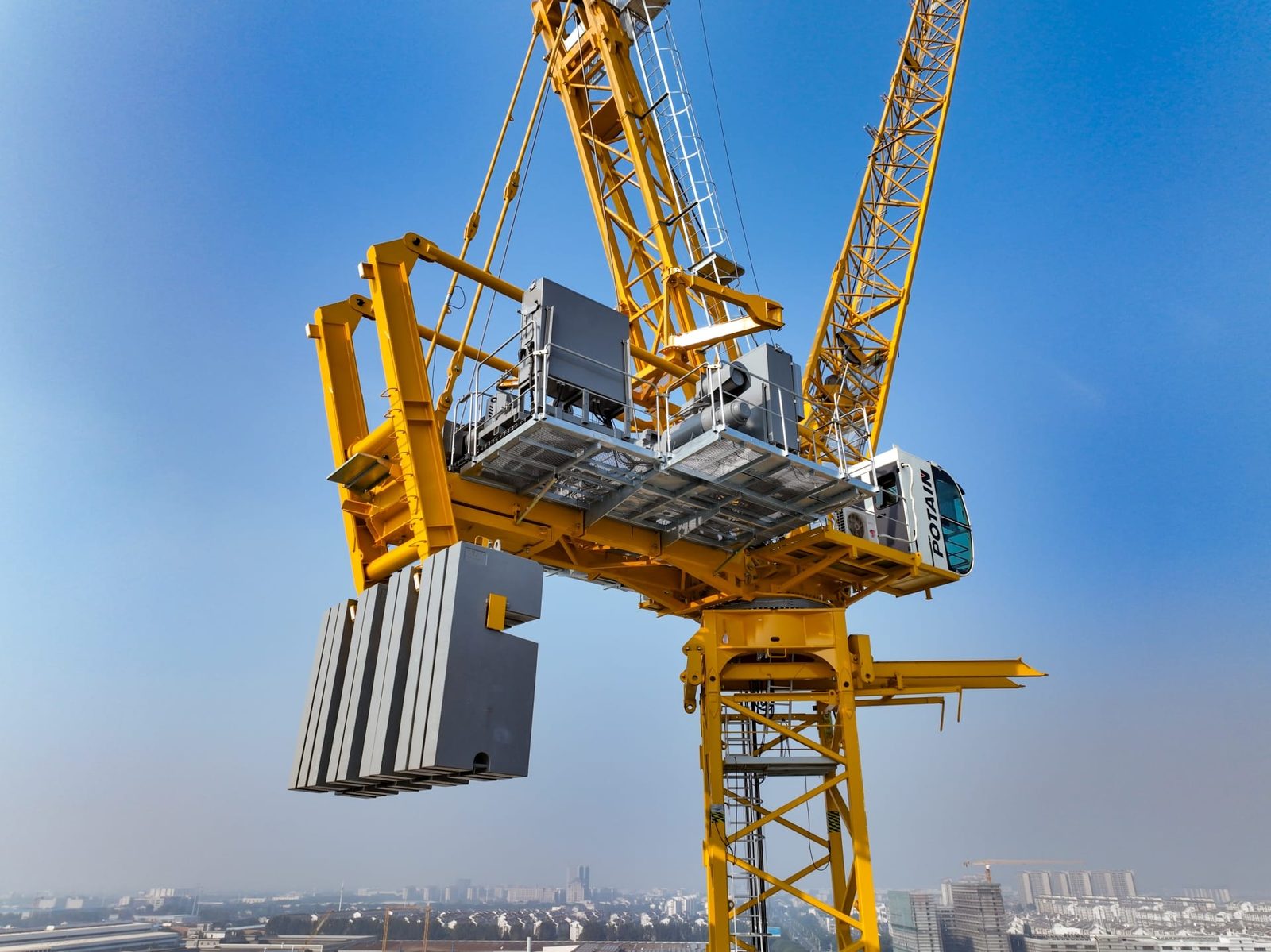
MCR625
32 tonnes on a luffing jib up to 65 metres, for high-rise towers with heavy formwork and precast.
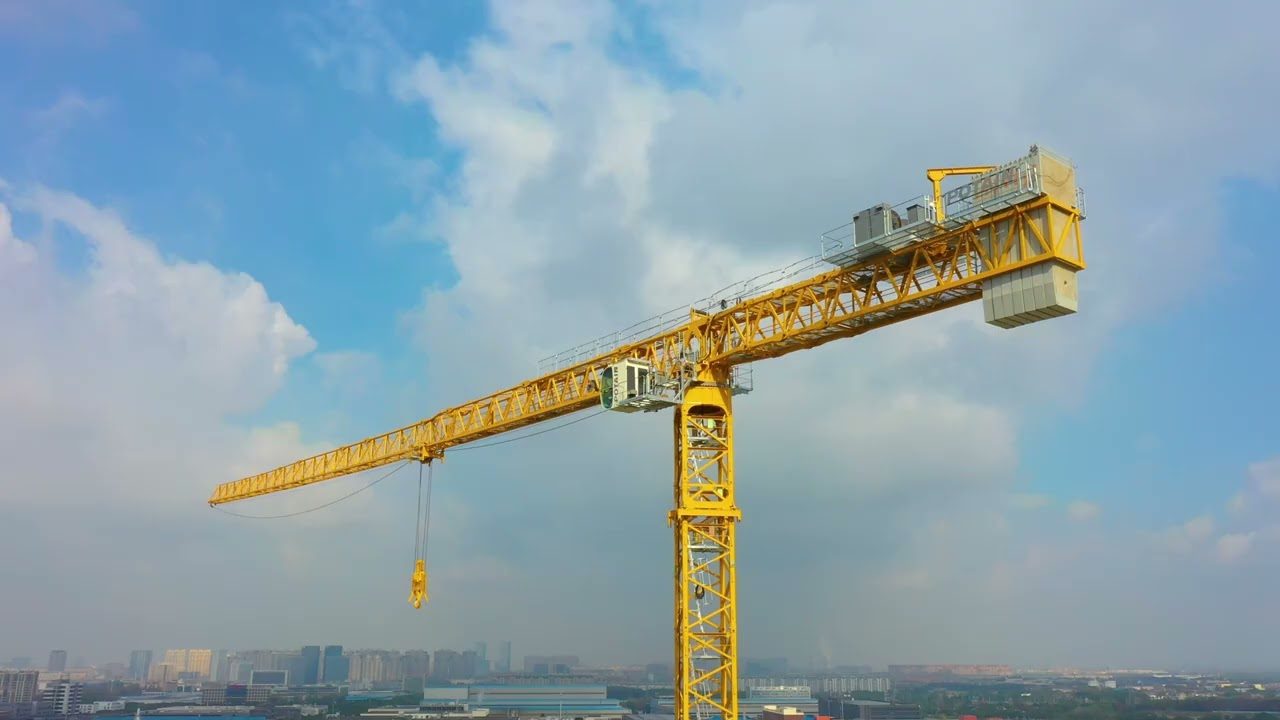
MCT1105
50 tonnes, and still 11 tonnes at the end of an 80-metre jib. For infrastructure and heavy industrial lifts.

MCR815
64 tonnes on a luffing jib up to 70 metres, for major towers and heavy lifts on constrained sites.
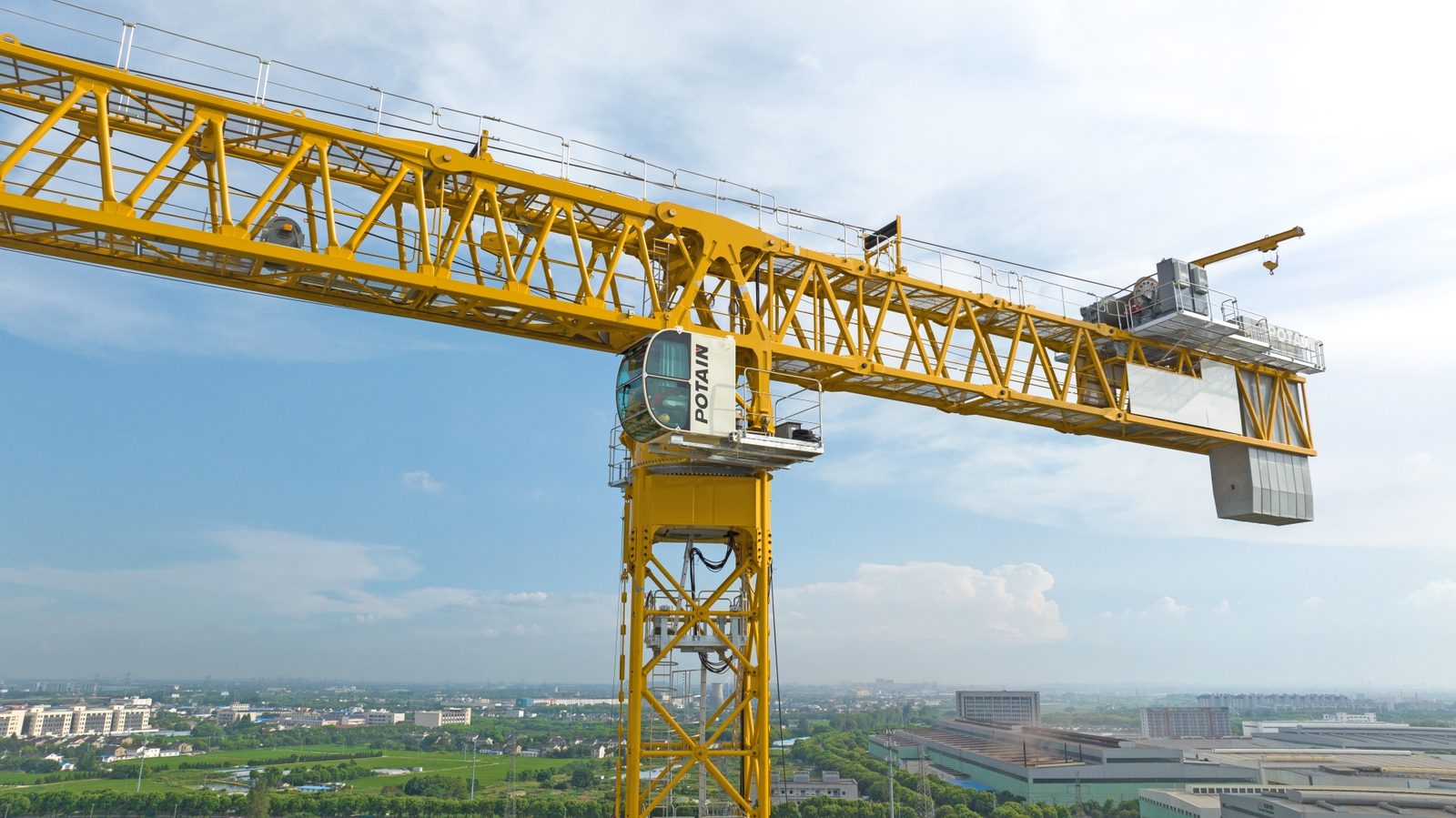
MCT2205
80 tonnes, and 23.5 tonnes at the end of an 80-metre jib. For the heaviest precast, steel and plant lifts.
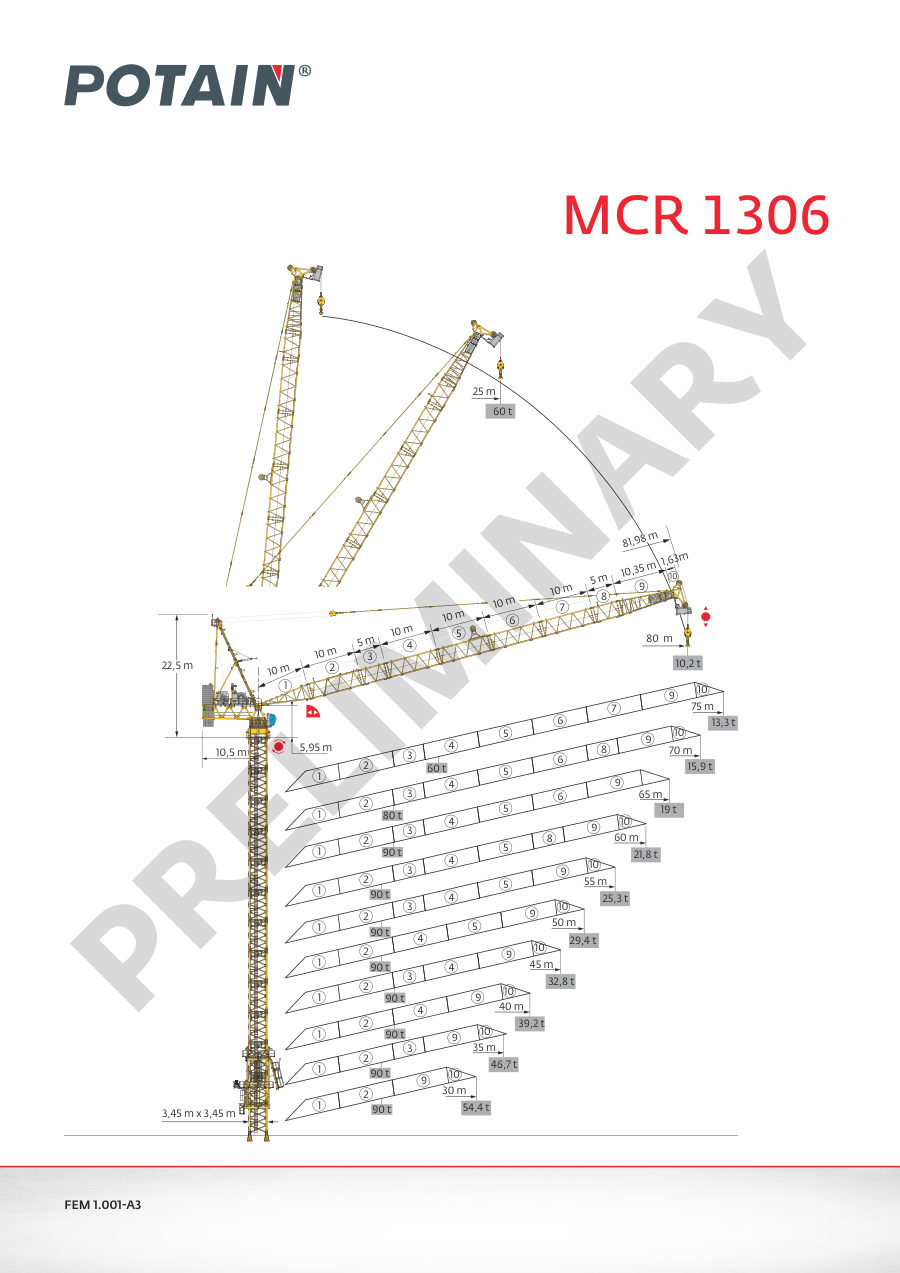
MCR1306
Our biggest crane: 90 tonnes on a luffing jib up to 80 metres, for landmark towers and very heavy lifts on tight sites.
Side by side.
| Model | Capacity | Max jib | At jib end | Datasheet |
|---|---|---|---|---|
| MCR625 | 32 t | 65 m | 6.4 t | |
| MCT1105 | 50 t | 80 m | 11 t | |
| MCR815 | 64 t | 70 m | 7 t | |
| MCT2205 | 80 t | 80 m | 23.5 t | |
| MCR1306 | 90 t | 80.4 m | 10 t |
Every figure is read from the Potain datasheet for that crane. Capacity is the most it lifts close in; the jib-end figure is what it lifts at the tip of its longest jib.
What these terms mean
- Flat-top
- The jib stays horizontal. Simpler and cheaper to erect where there is room overhead and nothing close by to swing around.
- Luffing jib
- The jib (the arm) raises and lowers instead of staying flat. That lets the crane work tight city sites and swing its load clear of nearby buildings.
- At jib end
- What the crane lifts at the very tip of the jib. That is the furthest reach, and the point where it carries the least.
Not sure which crane fits the job? Send us the lift and we'll size it