
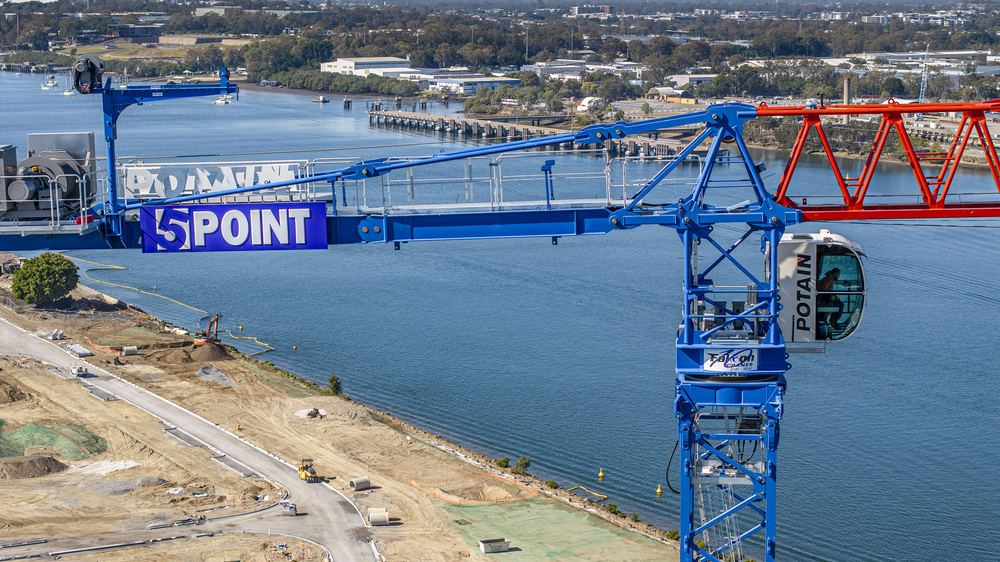
Capacity at radius, not maximum capacity
A tower crane's headline figure — “10 tonnes” — is what it lifts close to the mast. Out at the end of the jib the same crane might carry two or three tonnes. What sizes the crane is the weight of your heaviest pick at the radius it has to reach. Work that out first: the heaviest thing the crane will lift (a formwork table, a bundle of bar, a precast panel, a plant item) and the distance from the crane's centre to where it lands.
Put that pair into the lift check and it lists the cranes whose load chart carries it. Every crane page also has its load curve, so you can read the capacity at your radius straight off it.
Reach matters as much as weight
A crane that can lift your load but can't reach the far corner of the slab is the wrong crane. Check the jib length you need against the site: the furthest pour, the laydown area, the point trucks unload. If the jib has to pass over a neighbour's property you may also need an over-sail agreement, which takes time to arrange — start early.
The jib type changes the shortlist
We sell cranes in four groups: self-erecting, flat-top, luffing and heavy lift. A luffing jib raises and lowers, so it parks steep and works sites hemmed in by other buildings, other cranes or a flight path. A flat-top is simpler and cheaper to erect where there is room overhead. That choice often matters more than a tonne either way — see luffing, flat-top and hammerhead.
What we need to confirm it
Send us the heaviest load, the radius it lands at, the site address and the programme. We check it against the actual load chart for the configuration — jib length, number of falls, free-standing height — and come back with the models that do the job and what they cost. The lift check on the cranes page is a first-pass filter you can run yourself in the meantime.
Common questions
Can I use a smaller crane if I only lift heavy loads near the mast?
Sometimes. If every heavy pick is close in and the long reaches are all light, a smaller crane can work. Send us the load plan and we check it against the chart.
How far ahead should I book the crane?
As early as the design allows. The base and starter system need four weeks' notice, and over-sail agreements and permits can take longer than that.
Have the job in front of you? Tell us the load, the radius and the site →